
What happens when Leadership does not remain inside the classroom? What happens when the experiences that help students become more responsible, independent and willing to take initiative become part of the way the whole school operates? A school can introduce Leadership activities, organize projects and give students responsibilities, but a culture of Leadership requires something more. It requires the people who form the school community to start seeing responsibility, cooperation and initiative as part of their everyday way of working together.
A student who is encouraged to make decisions in the classroom but is not given any opportunity to express an opinion about the school community will quickly understand that their autonomy has limits. An Educator who is asked to encourage independent thinking but is not given space to contribute to decisions that affect their own work may experience the same contradiction. This is why TRU-GUT does not see Leadership as something that belongs only to students. Leadership needs to be experienced by the people who create the educational environment around them.
The school Leadership has an important role in creating this environment. This does not mean giving students responsibility for everything or allowing every decision to become a group discussion. It means identifying the areas in which students can genuinely contribute and creating clear boundaries within which they can make decisions. The same principle can apply to Educators. School Leaders can give them opportunities to propose ideas, experiment with different approaches, take responsibility for initiatives and reflect on what works and what needs to change. In this way, Leadership is not simply delegated; it is developed.
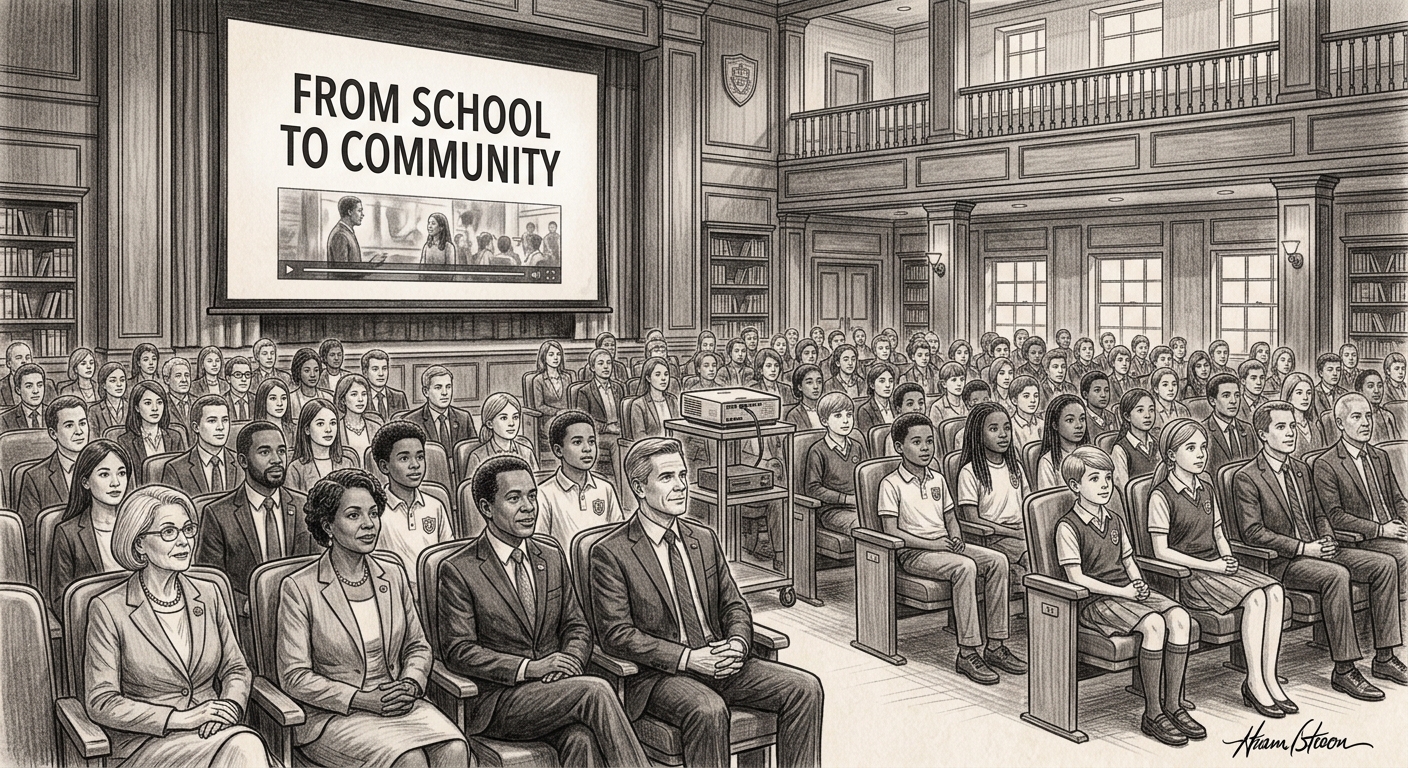
This is where TRU-GUT moves from the classroom to the school community. A student may learn to negotiate during a project, but the experience becomes more meaningful when negotiation is also part of the relationship between students and Educators. An Educator may learn to step back and allow students to make decisions, but this becomes more powerful when the school Leadership also knows when to step back and allow Educators to take responsibility. Leadership is therefore experienced at different levels of the same community.
A TRU-GUT-based school program could create opportunities for students to take responsibility for real school experiences, while Educators and School Leaders act as Mentors and coordinators. Students could participate in organizing an event, improving an aspect of school life, welcoming new students, developing a project that responds to a real need or finding solutions to problems that affect their everyday experience. The important point is that these responsibilities should not be symbolic. Students should be able to make decisions, see the results of those decisions and understand when they need to reconsider them.
This also changes the way the school understands mistakes. If Leadership is part of the school culture, mistakes cannot automatically be treated as evidence that students should not have been given responsibility in the first place. Some decisions will not work. Some projects will need to change direction. Some students will discover that they are not ready for a particular responsibility and will need more guidance. These are not necessarily failures of the programme. They are part of the experience through which responsibility becomes real.
The same applies to Educators and School Leaders. A school that wants students to experiment cannot expect its adults to have every answer before an initiative begins. A school culture that encourages Leadership needs to accept that Educators and School Leaders may also need to experiment, reconsider decisions and change direction. This is where the idea of the Mentor-Leader becomes important. The Mentor-Leader does not create an environment in which mistakes are avoided at all costs. They create an environment in which mistakes can be examined and used to decide what should happen next.
The ultimate purpose of a TRU-GUT-based school program is therefore not to create a small group of students who can be described as “leaders”. It is to create more opportunities for people within the school community to take responsibility for something that matters to them and to others. Some students will lead from the front. Others will contribute by organizing, listening, solving problems, supporting their peers or noticing something that needs to change. Leadership does not have to look the same in everyone.
When a school begins to operate in this way, Leadership stops being an additional educational objective and becomes part of the culture of the community. Students learn that their ideas can have consequences. Educators learn that their role is not always to have the answer. School Leaders learn that leading does not always mean being the person who makes every decision. Everyone begins to understand that responsibility can be shared without authority disappearing.
This is where Leadership becomes collective. It is still personal because every person has to decide how they will respond, what they will contribute and what responsibility they are willing to take. But it no longer has to be lonely. A school community can become a place where people do not simply learn how to lead themselves but also learn how to lead with others.
TRU-GUT does not aim to add Leadership to the curriculum. It aims to help schools create the conditions in which Leadership can become part of the way their community learns, works and grows together.
TRU-GUT does not see Leadership as something that belongs only to students. Leadership needs to be experienced by the people who create the educational environment around them.The Leadership Manifesto