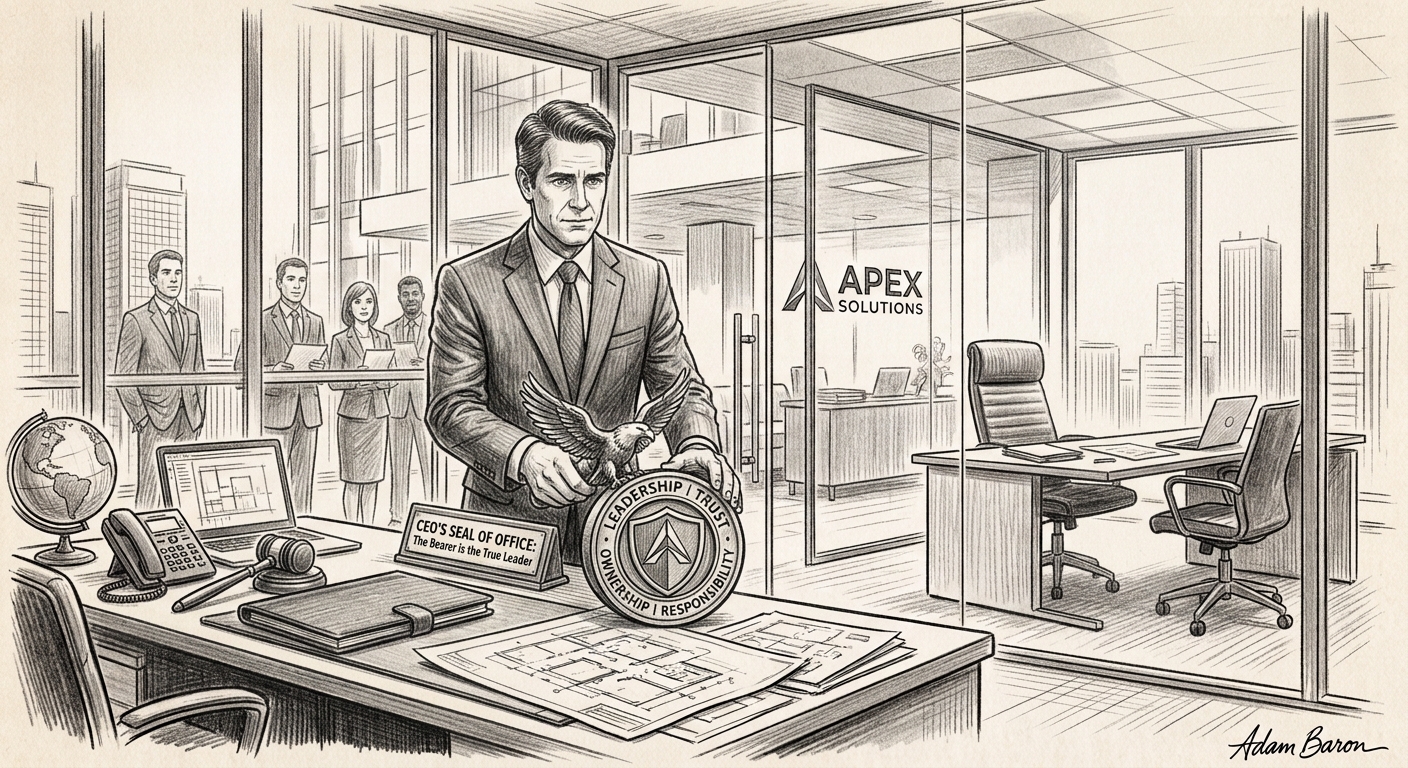
What happens when employees are not only expected to do their jobs well, but are also encouraged to take responsibility for their work, make decisions and contribute their ideas? An organization needs people who can perform their responsibilities, but it also needs people who can think, communicate, cooperate and respond when something does not go according to plan. This is where employee development becomes connected to Leadership development. An employee does not need to become a manager in order to demonstrate Leadership. Leadership can begin when a person stops waiting for instructions for every decision and starts taking ownership of what they do.
There is an important difference between completing a task and taking responsibility for it. An employee who focuses only on completing a task may ask what needs to be done and follow the instructions they have been given. An employee who takes ownership may also ask whether there is a better way to approach the task, whether there is a problem that needs to be addressed, or what they can do to improve the situation. This does not mean that employees should question everything or ignore the structure of an organization. It means that they should gradually become more capable of thinking about their work and understanding that their contribution can affect what happens around them. This is an important step in developing people who are able to lead themselves and, eventually, take responsibility for others.
The TRU-GUT Method can help organizations create opportunities for employees to experience this type of responsibility instead of simply being told that they should become more responsible. A program can place employees in situations where they have to work together to solve a real problem, make a decision within specific boundaries, develop and present an idea, divide responsibilities or reconsider an approach that has not worked. The purpose is not to create artificial activities that have little connection with their professional lives. The purpose is to create meaningful experiences in which people have to communicate, cooperate, make decisions and deal with the consequences of those decisions. When people have a real reason to take responsibility, they can begin to understand their own strengths, their difficulties and the way they respond to situations that require them to take initiative.
This is also why Leadership development cannot depend only on training sessions or theoretical knowledge. If we want people to become better decision-makers, we need to give them opportunities to make decisions. If we want them to take responsibility, we need to give them responsibilities. If we want them to communicate their ideas, we need to create situations in which their ideas are needed. If we want them to learn from mistakes, we need to allow them to experience situations in which things do not go exactly as planned. People can understand the theory of Leadership, but they develop their own way of leading through experience, reflection and the opportunity to try again.
However, responsibility cannot be developed by employees alone. The role of the Leader is equally important. An organization cannot ask employees to take initiative while controlling every decision they make. It cannot ask people to bring new ideas while rejecting every idea that is different from the usual way of doing things. It cannot ask employees to learn from mistakes if every mistake is treated as something that should never happen. If Leaders want people to take greater responsibility, they need to create the conditions in which this is possible. Employees need to know what they are responsible for, what decisions they can make, when they need support and what the consequences of their decisions may be. Autonomy does not mean leaving people alone. It means giving them enough space to make decisions while providing the guidance and boundaries they need.
This creates an important responsibility for Leaders and managers. They need to learn how to delegate without simply transferring a task to someone else, how to listen without immediately providing the solution, and how to support employees without controlling every step they take. They also need to look at their own reactions. If an employee makes a mistake, does the Leader use the experience as an opportunity for learning or immediately take control of the situation? If an employee suggests a different approach, is the idea genuinely considered? If employees are encouraged to speak openly, are they also allowed to disagree? These questions matter because the development of employees depends on the environment in which they work. People cannot develop autonomy in an environment where they are never allowed to make decisions, and they cannot develop initiative if someone else always finds the solution before they have the opportunity to try.
TRU-GUT programs can therefore be designed for both employees and Leaders. Employees can develop their ability to communicate, cooperate, make decisions, solve problems and take responsibility, while Leaders and managers can examine the way they create opportunities for people to develop these abilities. The aim is not to change people into one particular type of employee or Leader. Different people have different personalities, experiences and levels of confidence. Some may take initiative naturally, while others may need more time and support. Some may communicate confidently but find decision-making difficult, while others may have good ideas but hesitate to express them. Meaningful experiences can make these differences visible and can help both the individual and the organization understand where further development is needed.
Reflection is an important part of this process. After an experience, employees should have the opportunity to consider what happened, why they made certain decisions, how they communicated with others, what worked, what did not work and what they would change the next time. This is where the experience becomes more than an activity. It becomes a learning process. People begin to understand how they respond when they have responsibility, how they react when they disagree with others, how they behave when their first idea does not work and how willing they are to change their approach. They also begin to understand that Leadership is not something that a person either has or does not have. It can develop when people are given opportunities to practise it and reflect on what they have experienced.
This is what I would like the TRU-GUT Method to bring to organizations. It would not be another program in which employees simply learn definitions of Leadership or are given a list of skills they are expected to develop. It would create meaningful situations in which people have to practise responsibility, decision-making, communication, cooperation and problem-solving. It would also encourage Leaders to look at the way they create opportunities for employees to take responsibility. The goal would not be to turn every employee into a manager. The goal would be to help more people become capable of leading themselves, taking ownership of their work and contributing more actively to the organization.
Leadership in an organization does not begin when someone receives a promotion or becomes a manager. It begins when a person understands that they can take responsibility for what they do and that their decisions can make a difference. TRU-GUT can help organizations create more opportunities for this to happen by giving people a real reason to take responsibility, make decisions, cooperate with others and discover what they are capable of becoming.
Leadership in an organization does not begin when someone receives a promotion or becomes a manager. It begins when a person understands that they can take responsibility for what they do and that their decisions can make a difference.The Leadership Manifesto