What happens when organizations focus not only on what their employees produce, but also on what their people are capable of becoming? Organizations naturally need results. They need employees who can perform, meet responsibilities and contribute to common goals. Performance therefore matters. But what happens when performance becomes the main way in which people are understood? Can an organization really develop if it only measures what its people are already doing without also paying attention to what they could learn, improve or take responsibility for?
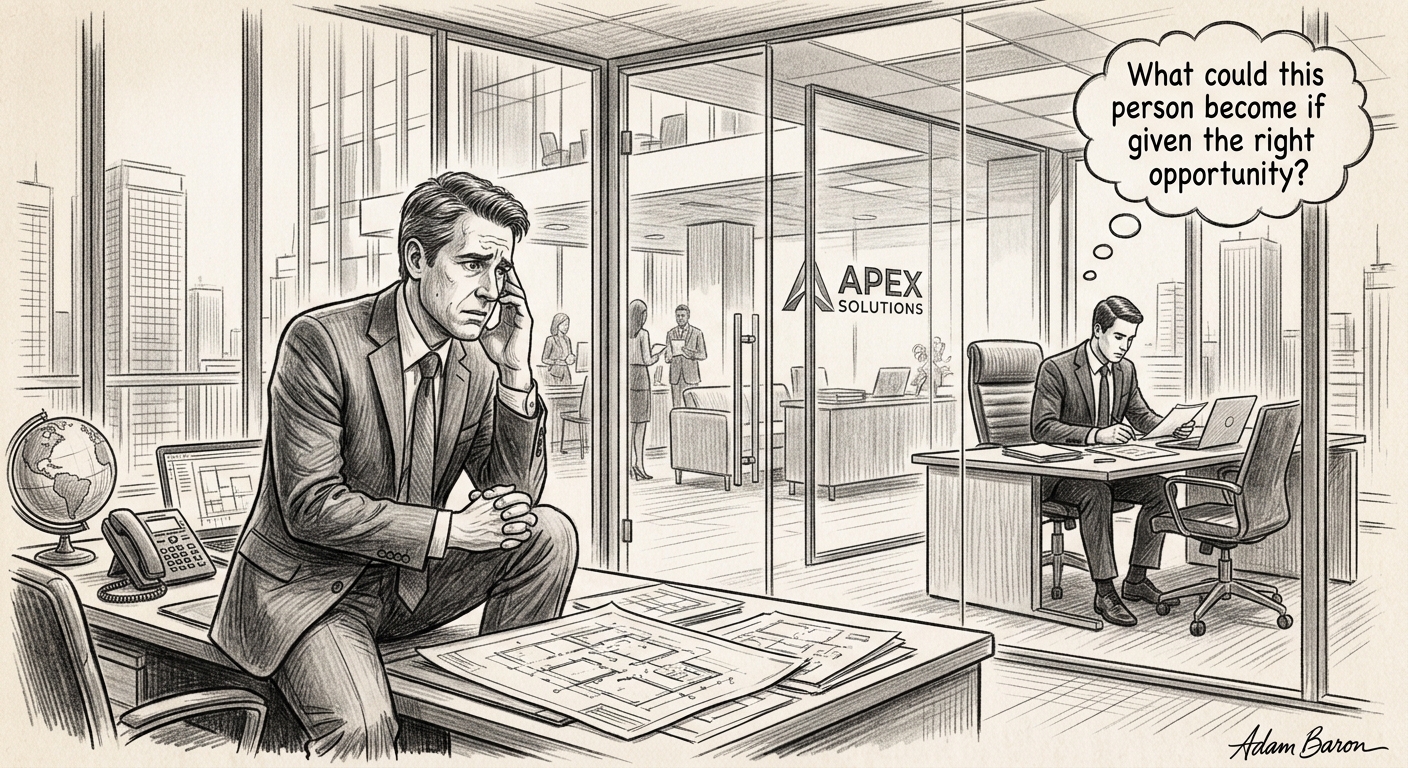
In “The Leadership Manifesto”, I refer to Leadership as the process of building people. This idea can also be applied to the workplace. A Leader does not simply need to make sure that work is completed. A Leader also needs to understand the people who are part of the organization, recognize their capabilities, identify where they can develop and create opportunities for them to take greater responsibility. This requires a different way of looking at people. Instead of asking only, “How well is this person performing?”, we can also ask, “What could this person become if given the right opportunity?”
This is where employee development becomes closely connected to Leadership. An employee may already be performing well but may not have developed the confidence to make decisions independently. Another employee may have strong ideas but hesitate to express them. Someone else may be highly capable but depend too heavily on instructions because they have never been given the opportunity to take ownership of a task. There may also be employees who have leadership potential without even recognizing it themselves. If an organization focuses only on current performance, some of these capabilities can remain unnoticed.
TRU-GUT approaches people development through observation, communication, responsibility and experience. The purpose is not to give employees another list of skills that they are expected to acquire. It is to create opportunities in which they can recognize their own capabilities and understand what they need to develop further. This may involve taking responsibility for a task, working with colleagues to solve a problem, making a decision without having every answer in advance, receiving feedback, reconsidering an approach or taking the initiative to change something that is not working.
Autonomy is an important part of this process. However, autonomy does not mean simply telling employees to “take more responsibility”. An organization needs to create the conditions in which responsibility can actually be taken. Employees need to know what they are responsible for, what decisions they are allowed to make, when they can ask for support and what happens when a decision does not produce the expected result. This is where Leadership becomes important. The Leader needs to know when to guide, when to give space and when to step in.
This can also change the relationship between managers and employees. A Manager may focus primarily on whether a task has been completed correctly. A Leader also needs to be interested in what the employee discovered while completing it, what decisions they made, what difficulties they encountered and what they could do differently next time. This does not make performance less important. It gives performance another dimension because the process of achieving a result becomes part of the person’s development.
TRU-GUT can therefore be used to create programs that bring employees into real situations where they need to communicate, collaborate, negotiate, solve problems and take responsibility. The purpose is not to create artificial leadership exercises that have little connection with their everyday work. It is to use meaningful situations to help employees understand how they respond when they are given responsibility, when they disagree with others, when their ideas are challenged or when a plan needs to change.
The same principle can apply to managers and employers. If an organization wants employees to become more autonomous, its Leaders also need to examine how much control they are willing to release. If they want employees to take initiative, they need to consider whether new ideas are actually welcomed. If they want people to communicate openly, they need to be prepared to hear opinions that they may not agree with. If they want employees to learn from mistakes, they need to consider how they themselves respond when something does not go according to plan.
This is why TRU-GUT is not simply about developing employees. It is also about questioning the relationship between the people who lead and the people who are being led. Employee development cannot be separated completely from Leadership development because the environment in which people work influences how much responsibility they are prepared to take.
An organization that develops people does not stop expecting performance. It simply recognizes that people are not finished products. Their capabilities can change, their responsibilities can expand and their understanding of themselves can develop through experience. When organizations create the conditions for this development, they are not investing only in what employees can do today. They are also investing in what they may be capable of doing tomorrow.
TRU-GUT brings the idea of “building people” into the workplace: developing the person behind the performance, creating opportunities for responsibility and autonomy, and helping organizations discover leadership potential that may already exist within their people.
TRU-GUT approaches people development through observation, communication, responsibility and experience. The purpose is not to give employees another list of skills that they are expected to acquire. It is to create opportunities in which they can recognize their own capabilities and understand what they need to develop further.The Leadership Manifesto