As Educators, we are usually deeply concerned about the educational outcomes of our teaching. Some of us also spend time exploring different teaching methods, differentiating our teaching material and trying to respond to the different needs of our learners. Unfortunately, these efforts are not always visible to others. As also mentioned in “The Leadership Manifesto”, we often prefer to look at the top of the iceberg. The real question that TRU-GUT raises is the following: If we really want to be successful at teaching, do we need to focus mainly on what we intend to teach, or would it be more useful to focus on what our students are already capable of doing?
When using the TRU-GUT Method, the Educator has the opportunity to observe students’ capabilities and understand what each one of them can already do and which areas it would be more beneficial for them to develop further. This also gives the Educator the opportunity to become more self-aware and develop a clearer understanding of what is feasible and appropriate for each student to practice, so that learning can respond to their personal needs. This is not simply about differentiated teaching. It is mostly about helping learners recognize what they could improve on their own, so that they can take the lead in preparing and completing their own tasks. The Educator-Mentor helps the student become aware of their own capabilities and gives them space to participate in the selection of their own responsibilities. Even the process of defining responsibilities among the members of a student team can be quite revealing for everyone involved.
Through the TRU-GUT Method, Educators also have the opportunity to develop their own Leadership skills because they quickly become aware that responding to their learners’ individual needs, offering guidance based on their feedback and helping them build autonomy at the same time requires conscious effort. It does not happen randomly. The Educator is part of the team, but at the same time, the Educator is also the coordinator. While reading “The Leadership Manifesto”, you will realize that what I have just described is another way of distinguishing Leaders from Managers. Therefore, the Educator needs time to make this distinction clear to themselves first and then to others.
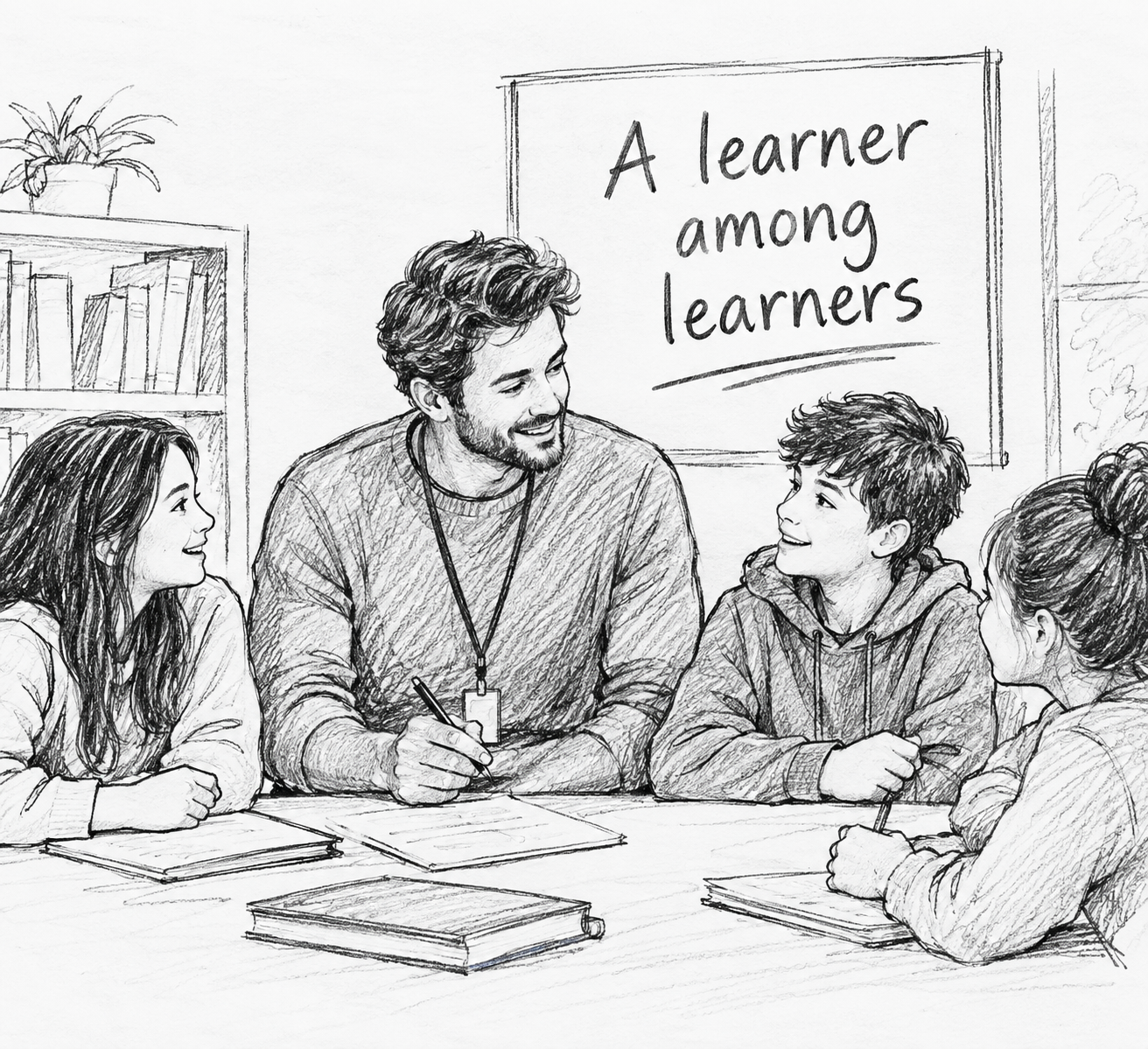
The Educator then has the opportunity to find answers to important questions such as: Can I be a learner among learners and, at the same time, be the person who establishes the knowledge acquired, without always being the person in charge who is responsible for everyone and everything? The real educational journey begins when the Educator starts to find an answer to this particular question. When that happens, among all the other Leadership skills that the Educator can develop, there is one thing that can also be gained: joy. The joy of teaching and learning that both Educators and students are looking for.
If we really want to be successful at teaching, do we need to focus mainly on what we intend to teach, or would it be more useful to focus on what our students are already capable of doing?.The Leadership Manifesto