

How can Educators practically help their students become leaders of their own learning? An Educator who aims to help a learner take the lead in their own learning path should first understand the distinction between being an Educator who teaches Leadership and being an Educator who practices Leadership. An Educator might teach students about responsibility but struggle to delegate responsibility in the classroom. They might encourage independent thinking but feel uncomfortable when students question their instructions. They might teach adaptability but continue using the same approach even when it is not working.
“The Leadership Manifesto” challenges our understanding of Leadership in a place that nobody expects: Motherhood. The truth behind it is that Leadership is not restricted to formal positions or professional environments. It develops through everyday decisions, relationships and responsibilities. The classroom is another environment in which Leadership can be observed, questioned and practiced. But it is not enough to teach Leadership in order to help students become leaders. You, as an Educator, should practice Leadership through your own teaching.
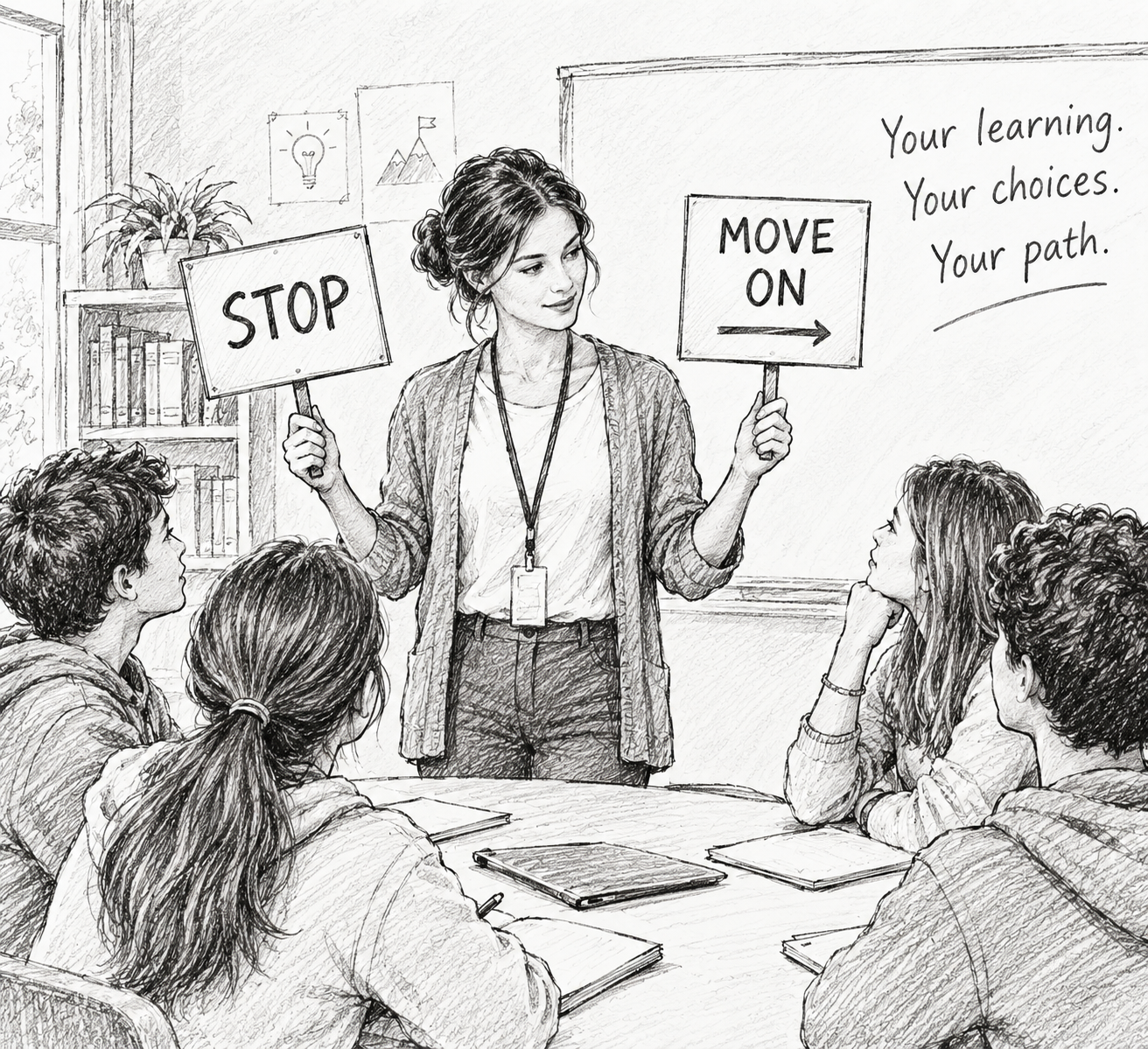
One fundamental prerequisite for helping students become the leaders of their own learning is to move them from following instructions to taking ownership of their learning. In order to do so, however, Educators should understand that leading also means knowing when to intervene and when to step back. This means staying close to students, giving them options and offering guidance, while at the same time allowing them to make their own decisions and learn from their own mistakes.
TRU-GUT as a method of teaching cannot be fully implemented by Educators who are not ready to trust students without controlling every step they take. At the same time, Educators should be ready to question themselves as Leaders and willing to establish open communication with their students. This allows them not only to teach students what negotiation means, but also to give them the experience of negotiating with adults about matters that genuinely interest them. Whether they are negotiating with their teachers, invited guests or other people involved in their project, younger learners need opportunities to experience what it means to express an opinion, listen to another perspective, make a proposal and reach an agreement.
This is where Leadership becomes part of learning rather than another subject that students are simply taught. The Educator creates the conditions in which students can make decisions, take responsibility, communicate, negotiate and learn from the consequences of their choices. The Educator does not disappear from this process. Instead, the Educator changes their role from being the person who controls every step to being the person who helps students learn how to take those steps themselves.
One fundamental prerequisite for helping students become the leaders of their own learning is to move them from following instructions to taking ownership of their learning. In order to do so, however, Educators should understand that leading also means knowing when to intervene and when to step back.The Leadership Manifesto